The Bureaucratic Ballet of IJsselstein: How a Football Pitch Became a Home
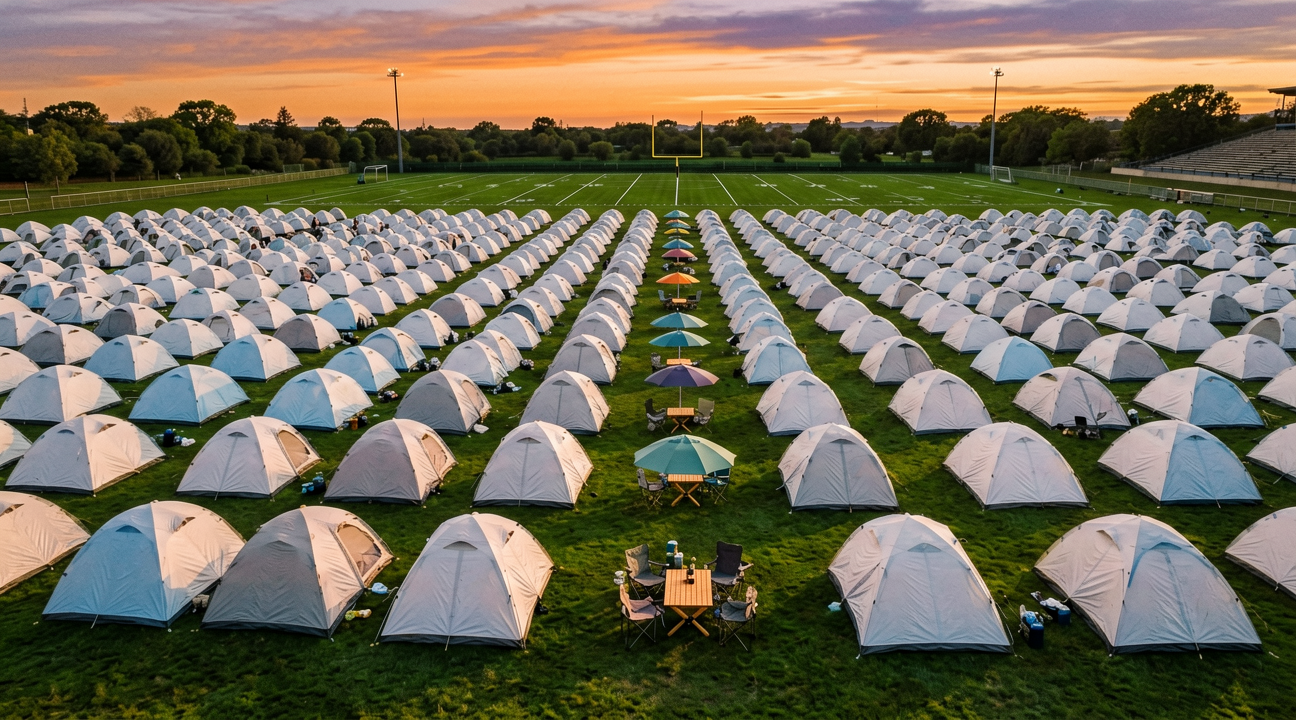
In the grand theater of modern governance, where decisions are often made in rooms with air conditioning and no grass stains on the trousers, IJsselstein recently staged a production that proved one simple truth: if you ask regular people to accept a plan they didn’t see coming, they will eventually find a way to make it loud.
A Relatively Peaceful Evening
The event was officially classified as “relatively peaceful” — a phrase that in municipal speak usually means “no one threw an egg at the police.” The demonstration against the reception of 100 to 150 refugees on the football field of IJFC served as a masterclass in civic frustration, where the local population managed to express their dissatisfaction without breaking the furniture.
The Mayor Gets Honest
The evening began at Het Podium, a location designated by the municipality with the kind of logistical foresight that suggests they knew exactly how much noise could be contained within a specific perimeter. There, Mayor Esther Weststeijn took the stage and delivered what can only be described as a moment of rare administrative vulnerability.
She admitted she had “sometimes been happier.”
In an era where politicians are trained to smile through the apocalypse, this admission was met with boos and whistles — a sound that suggests the local population appreciates honesty even when it comes from the top down.
Nobody Asked the Football Club
Following this display of transparency, IJFC chairman Remco Bloemheuvel took the stage to address what he described as a “surprising” decision by the municipality. He noted that a football field is perhaps not the most intuitive location for housing refugees who have already completed their asylum procedures — a distinction of such bureaucratic precision that it likely saved hours of paperwork.
According to Bloemheuvel, the club was not consulted regarding the loss of their pitch, a fact he presented as if it were a minor oversight in an otherwise flawless system. One wonders if the municipality considered asking for permission before turning a sports complex into a temporary village, but perhaps that would have been too much like democracy.
The Crowd Had Other Plans
After approximately thirty minutes, the protest at Het Podium concluded with instructions for attendees to “go home quietly.” The crowd, displaying a notable disregard for these instructions, proceeded to the town hall instead. There, they engaged in a celebratory display of fireworks and chanting slogans against the shelter.
A significant police presence was noted on site, though their primary function appeared to be observing rather than intervening — suggesting that the local law enforcement officers were enjoying a rare evening off from actual action.
Respectful Protesters and the Far Right
The demonstration was organized by the group “No asylum seekers’ center on Groenvliet,” led by an organizer named Mike who called for respectful behavior and collaborative solutions. It is always refreshing to see a protest that includes a preamble about how everyone should treat each other with respect, even while standing in front of a building they are protesting against.
Defend Netherlands was also present, bringing their far-right action group credentials to the evening. While previous protests in Loosdrecht had involved eggs and projectiles, the IJsselstein branch remained relatively subdued. By 21:00, the square in front of the town hall had emptied, leaving only a few dedicated members behind to ensure the night ended with dignity.
A Historic Achievement in Civic Restraint
The evening proved that while communication may be lacking and football fields may be repurposed for housing, the people of IJsselstein can still manage to agree on being slightly annoyed without causing a major incident. It was a historic achievement in civic restraint — or at least it would have been if anyone had actually listened to the instructions.